BACK
Improving clinic workflows and patient outcomes with agentic voice AI
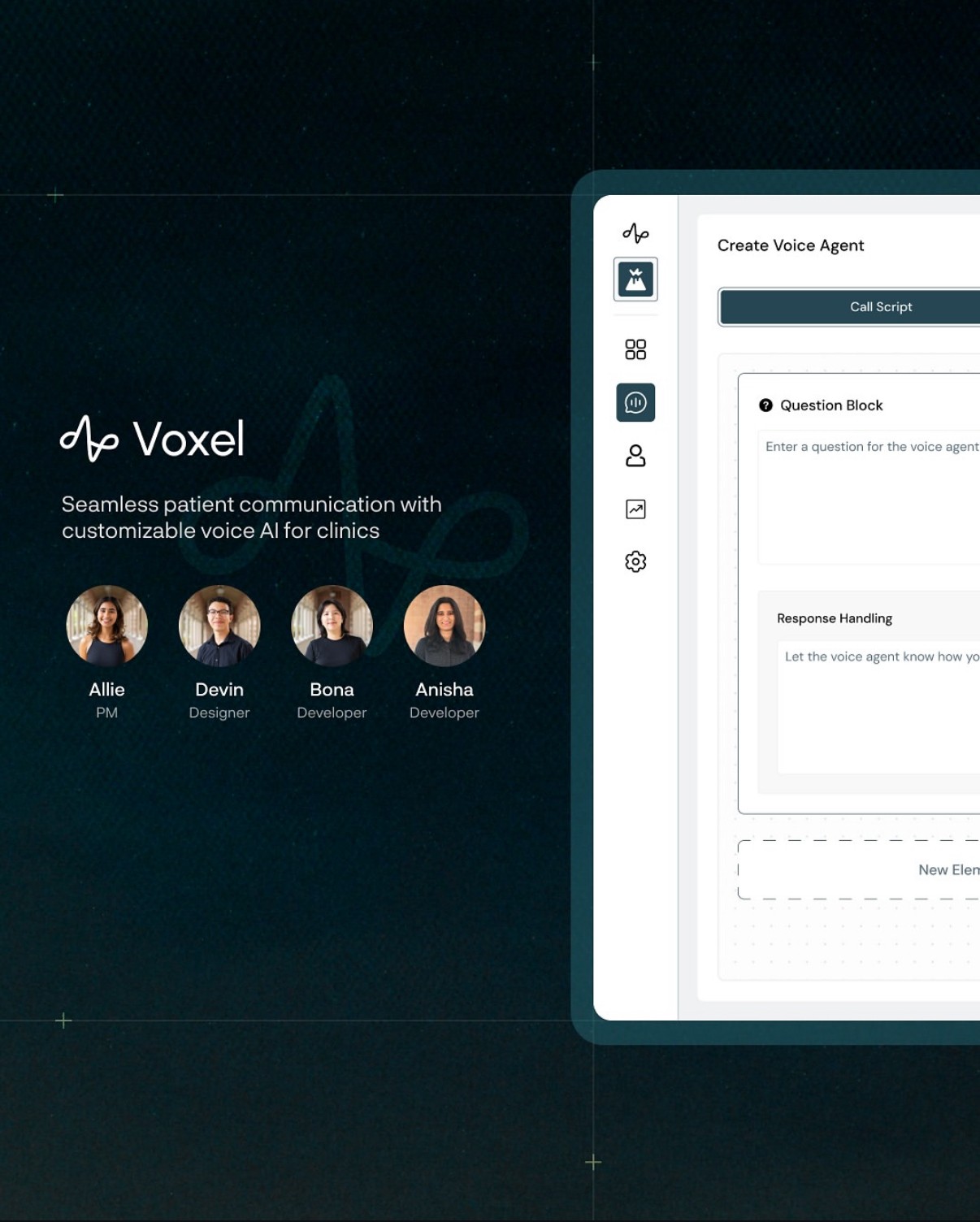
ROLE
Founding Designer
TIMELINE
Feb - May 2025
PRODUCT SPACE
Voice AI + Healthtech
TOOLS
Figma, v0, Notion
[CONTEXT]
Approaching the design process as not only a designer, but as a co-founder.
Through a ten week startup incubator program, I had the opportunity to explore what it means to be a designer and a co-founder.
Leaning on my team of one product manager and two developers, I learned what it takes to not just push pixels, but drive product strategy and impact as a founding team member.
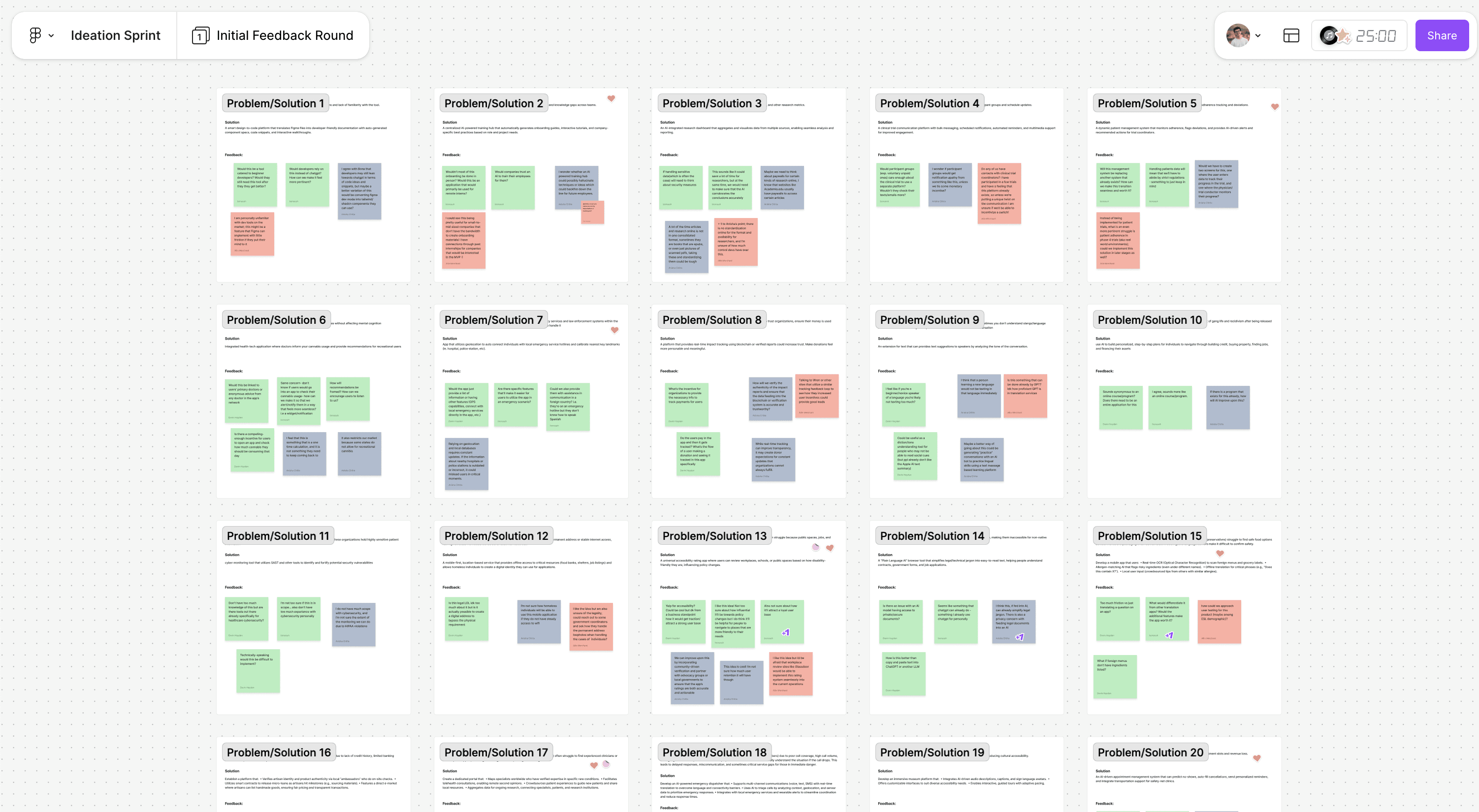
[ An ideation sprint I organized with my team on FigJam for exploring problem spaces and potential solutions. ]
After deciding to tackle the healthtech space, we reached out to the community around us.
Through multiple user interviews, we discovered how reliant the healthcare system is on effective communication – especially between providers and their patients.
Front-desk staff spent 1–2 hours after closing manually calling patients, juggling EMR lookups, improvising scripts, and tracking no-shows in spreadsheets. The burnout and inconsistency impacted clinic revenue and patient care.
[CLINIC COORDINATOR]
“Because so much of their day is spent calling patients, our front desk staff often end up staying after hours to finish the rest of their work."
[MEDICAL RECEPTIONIST]
"When making calls, I'm usually looking up the patient's information in our EMR before and during the call if things needs to be updated or referenced.
[PATIENT SCHEDULER]
"Our scheduling platform doesn't have a way to visualize no-show appointments, so I usually keep track in a spreadsheet in case we need to look back.
[PROBLEM]
Front-desk staff juggle manual reminder calls and fragmented patient information, creating unnecessary workload and gaps in communication.
After identifying a problem space, we worked through iterations of exactly how we might create a solution.
We originally focused on “reducing no-shows,” but through research I reframed the core problem as a workflow and cognitive load issue.
[INITIAL SOLUTION]
How might we reduce no-show appointments by improving the consistency of patient reminders?
[UPDATED SOLUTION]
How might we simplify clinic workflows so staff can easily manage patient outreach without extra cognitive load?
[SOLUTION PREVIEW]
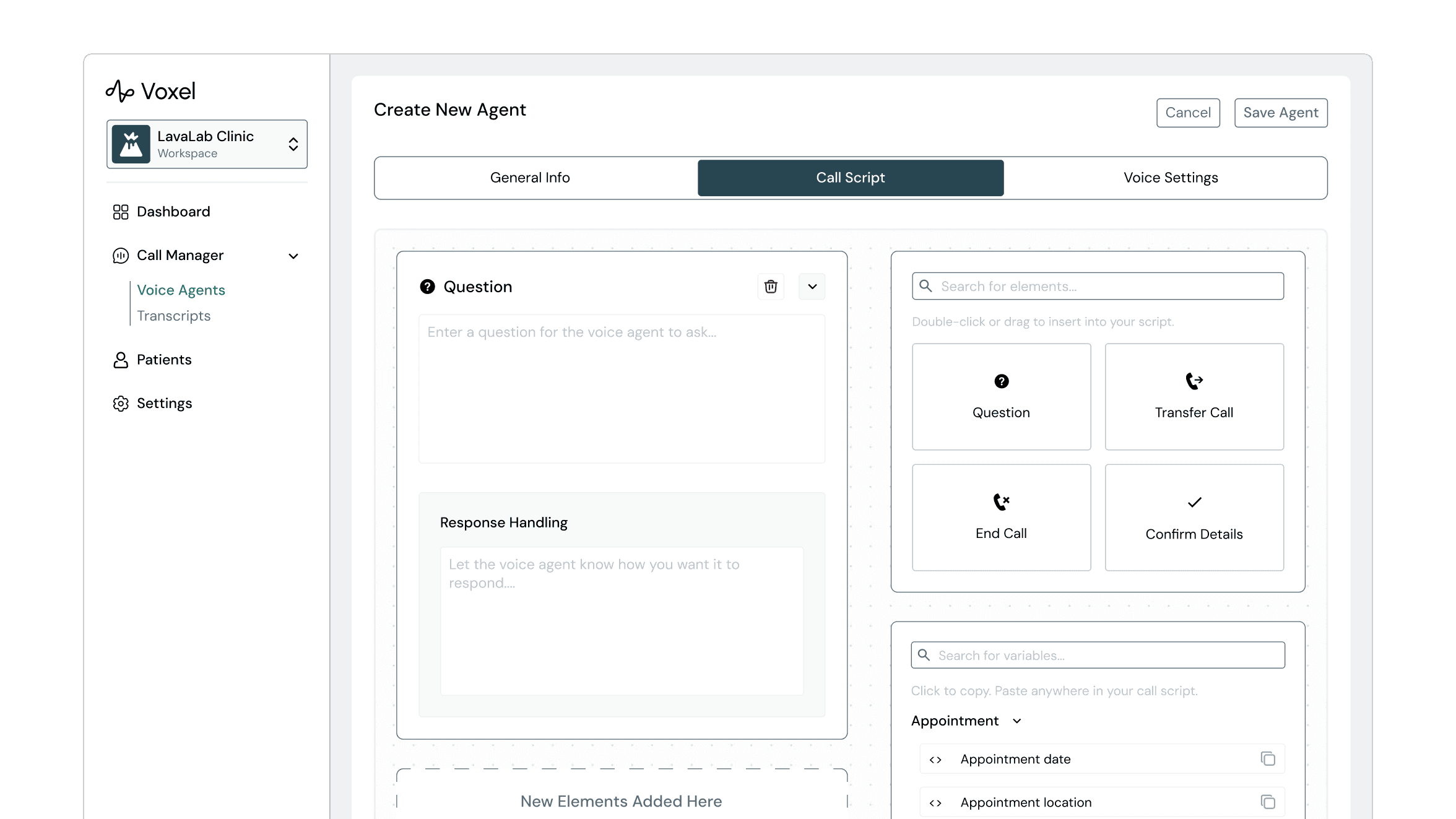
Voxel is a platform allowing healthcare clinics to build and deploy intelligent voice AI agents integrated in their established EMR systems, allowing clinic staff to focus on patient care over tedious manual calls.
Build structured call flows with modular blocks.
Clinics can shape call scripts around their exact workflows—quickly and easily.
Insert EMR data directly into your script.
EMR data ensures agents always speak with accurate, up-to-date context.
[PROCESS & DECISIONS]
Defining an interaction model in an unfamiliar, patternless space.
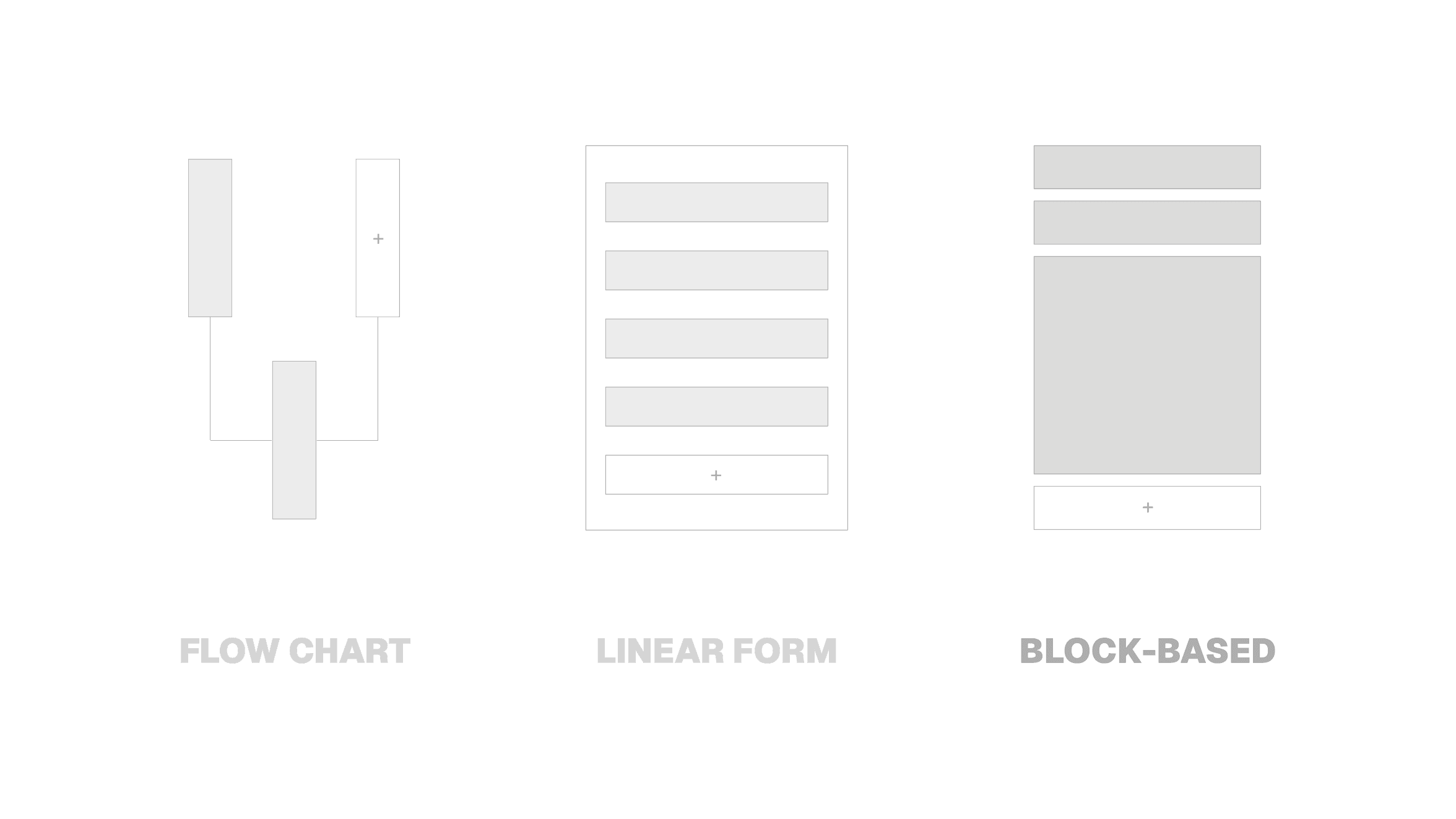
Working within the healthcare space, it was imperative that my design decisions were focused on creating the most frictionless workflow for clinics. I explored three patterns for creating custom AI agents: flowcharts, linear forms, and drag-and-drop builders.
[!]
Flowcharts were too technical.
Exposed every branch and system detail in the Retell API
Visual complexity made even basic scripts feel intimidating and hard to follow
[!]
Linear forms were too restrictive.
Lacked the flexibility for nuanced scripts and workflow differences
Couldn’t scale to unique clinic requirements or EMR-dependent content
[✓]
Drag-and-drop was the compromise.
Felt familiar, predictable, and mirrored the straightforward flow of real patient calls
Gave staff just enough control without overwhelming them
Turning a dense API into intuitive, digestible controls for clinics.
The Retell API offered deep branching and control, but exposing everything overwhelmed users. I defined a simplified set of building blocks that hid underlying complexity and made agent creation feel as intuitive as building a form.
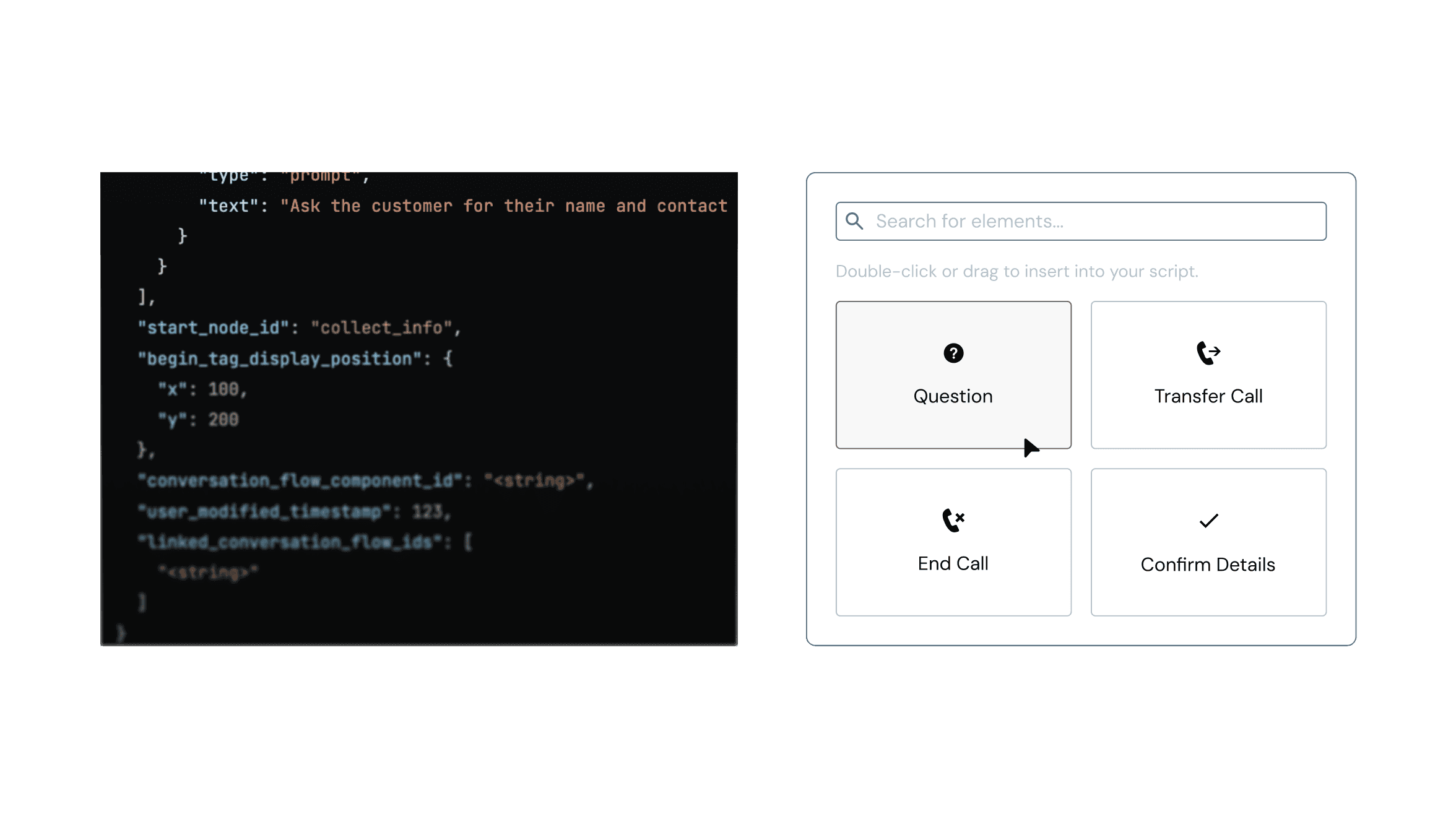
[I collaborated with my developers to unpack the API’s data model and shape it into intuitive frontend components.]
Reducing a key point of friction for clinics: juggling multi-platform data.
After shadowing clinics, I saw staff constantly flipping between EMRs while calling patients. I proposed a system of EMR-linked variable blocks (e.g., {patient_name}, {appointment_date}) that pulled real-time data directly into scripts.
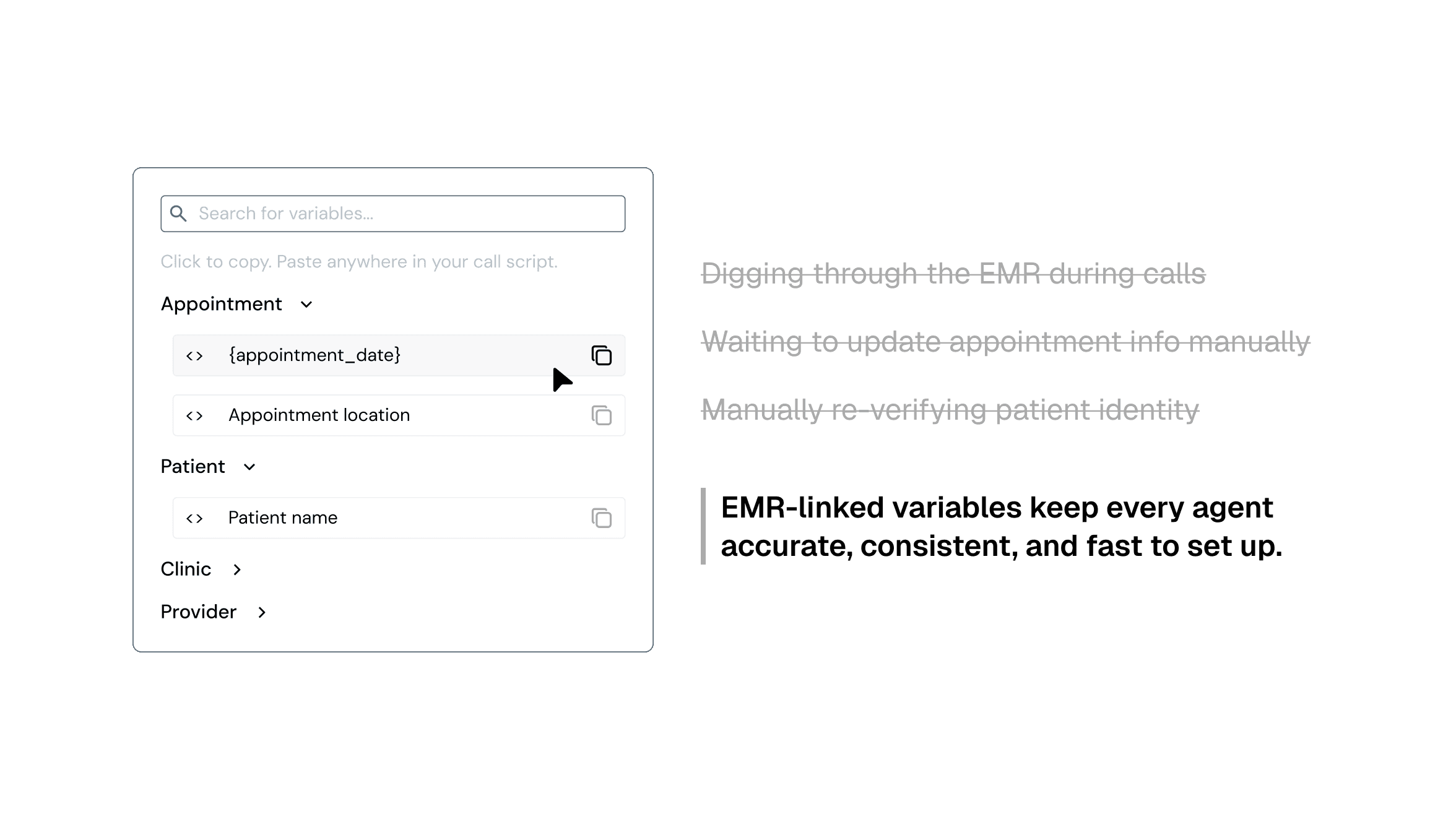
[These variables are directly linked to clinic's Electronic Medical Records, providing accurate context for voice agent creation.]
Working closely with design partners, I iterated to meet the needs of our users.
Through ongoing MVP testing with local clinics, we identified several gaps in how our product supported their needs. I iterated across the experience, from aligning data visualizations with clinic-desired metrics to refining the visual and content design for clearer workflow understanding.
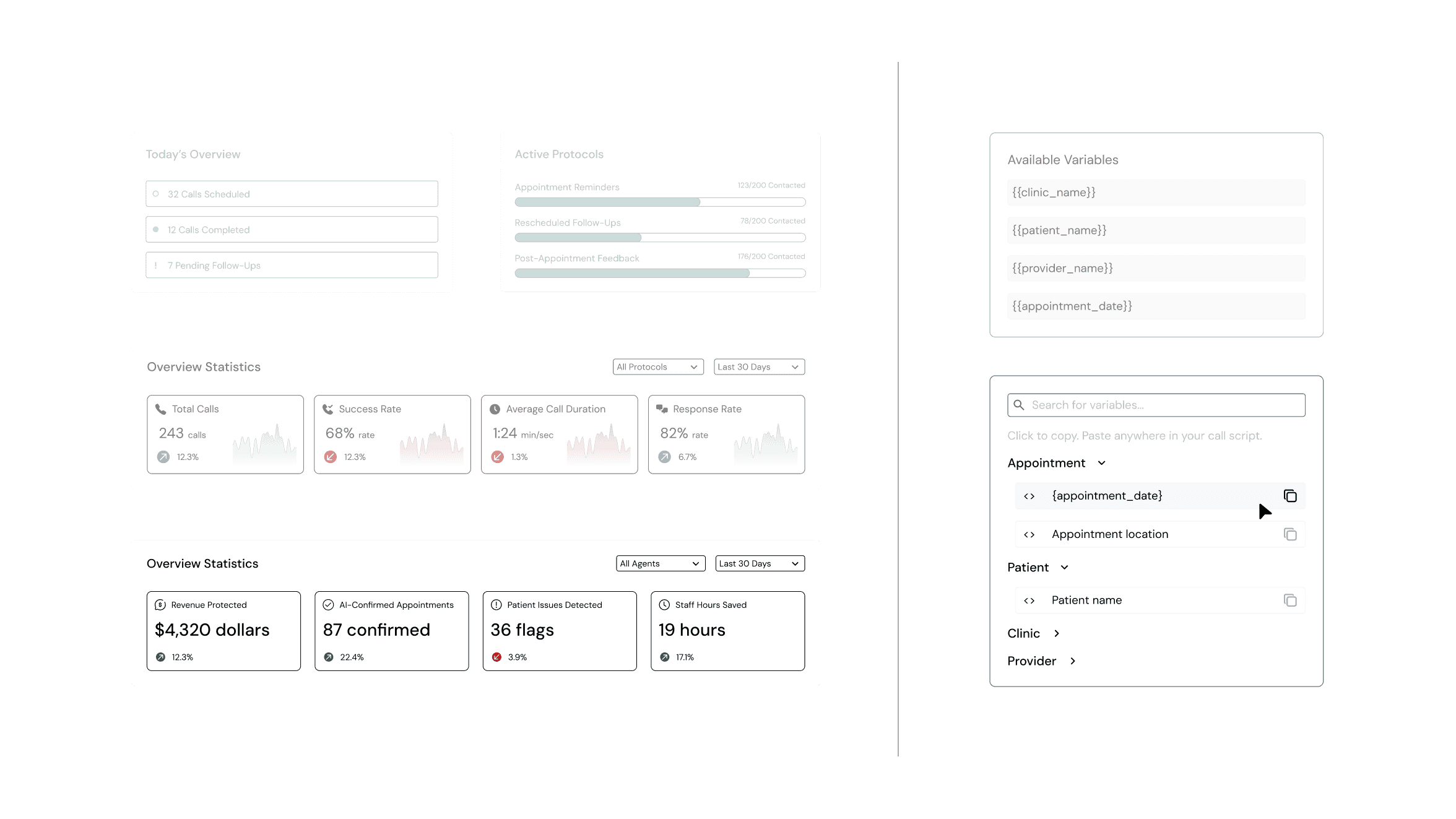
[Two examples of iteration: highlighting key business metrics for clinics (left) and improving the recognition of variables (right) through visual and content adjustments,]
[TAKEAWAYS]
Building a product from 0 → 1 can be a rollercoaster, but immensely valuable.
In addition to technical design skills, I gained hands-on product experience by:
Building weekly pitch decks
Participating in design critiques
Collaborating with a PM and developers
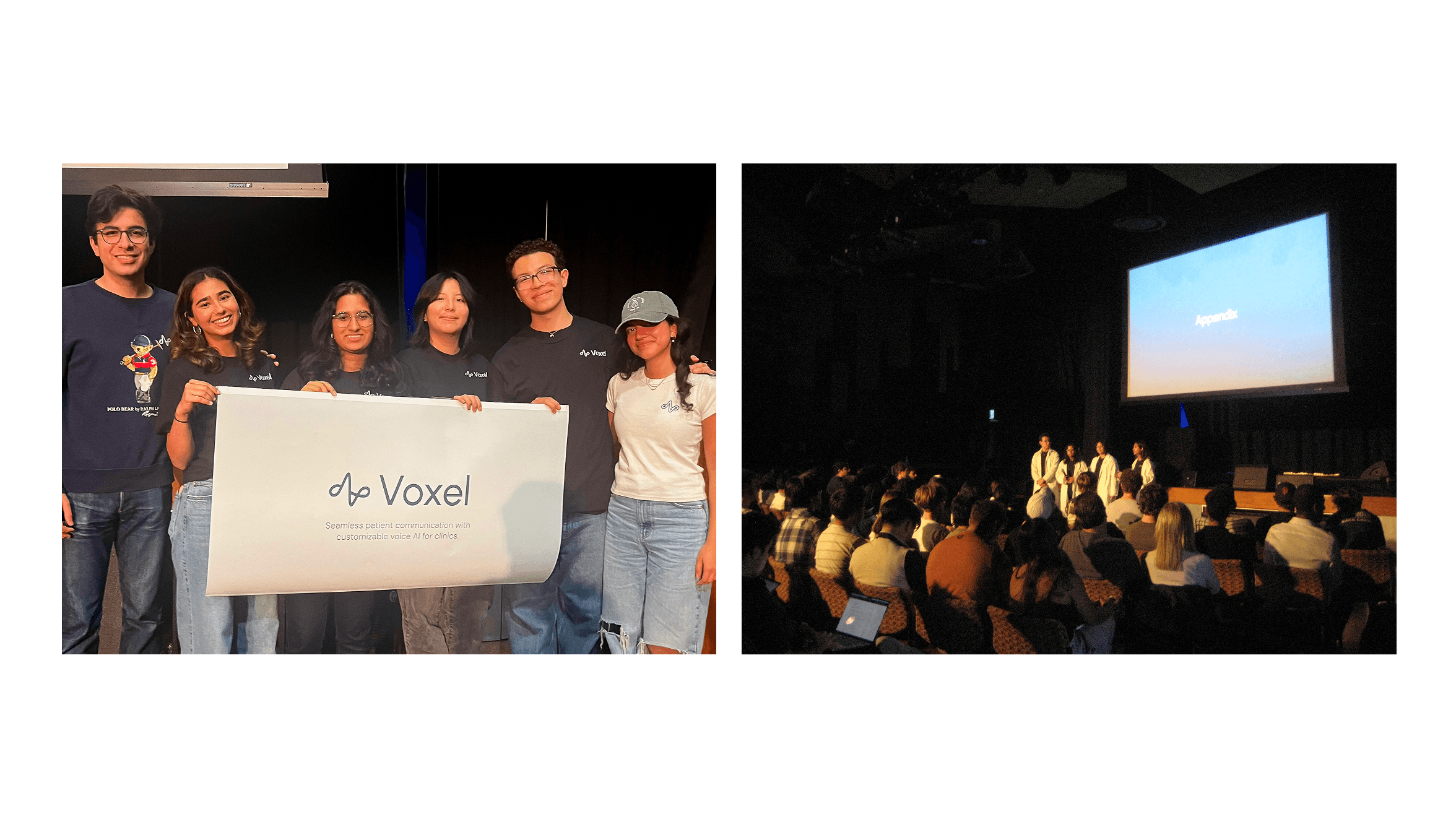
Pitching to investors at LavaLab Demo Day
[FOUNDER VS DESIGNER]
Being both a founder and designer is difficult – you have to prioritize not just user experience and needs, but business and product strategy goals effectively.
[DESIGN IS ABOUT RECOGNIZING PATTERNS]
You don't always needs to reinvent the wheel, but it's important to recognize when you should. People like familiar patterns, but they're not always applicable.
[DEFEND IDEAS, BUT EMBRACE COMPROMISE]
It may feel like others are rejecting your ideas, but advocating with research and knowing when to compromise is essential to identify the right approach.